1. Introduction: Overcoming Challenges in Modern Ore Flotation
Froth flotation stands as the backbone of contemporary extractive metallurgy, enabling the selective separation of valuable minerals from worthless gangue rock. However, as global ore reserves become more complex, depleted, and oxidized, processing plants face rising challenges in maintaining target recovery rates and concentrate grades.
Achieving efficient separation in froth flotation depends heavily on modifying the surface properties of mineral particles. Among industrial flotation reagents, Sodium Sulfide serves as an indispensable and highly versatile solution. Rather than acting as a simple additive, it performs a dynamic dual function across distinct flotation circuits:
Activating and conditioning oxidized minerals to make them receptive to standard collectors.
Selectively depressing unwanted sulfide minerals during separation stages in complex polymetallic circuits.
2. Transforming Oxide Ores: The Sulfidization Mechanism
Naturally occurring oxide ores of copper, lead, and zinc such as malachite, azurite, and cerussite, possess polar, water-loving (hydrophilic) surfaces. Unlike natural sulfide minerals, these oxidized particles do not interact readily with conventional flotation collectors like xanthates. Without surface alteration, these valuable metals are frequently lost into tailings.
How Sodium Sulfide Activates Oxide Minerals:
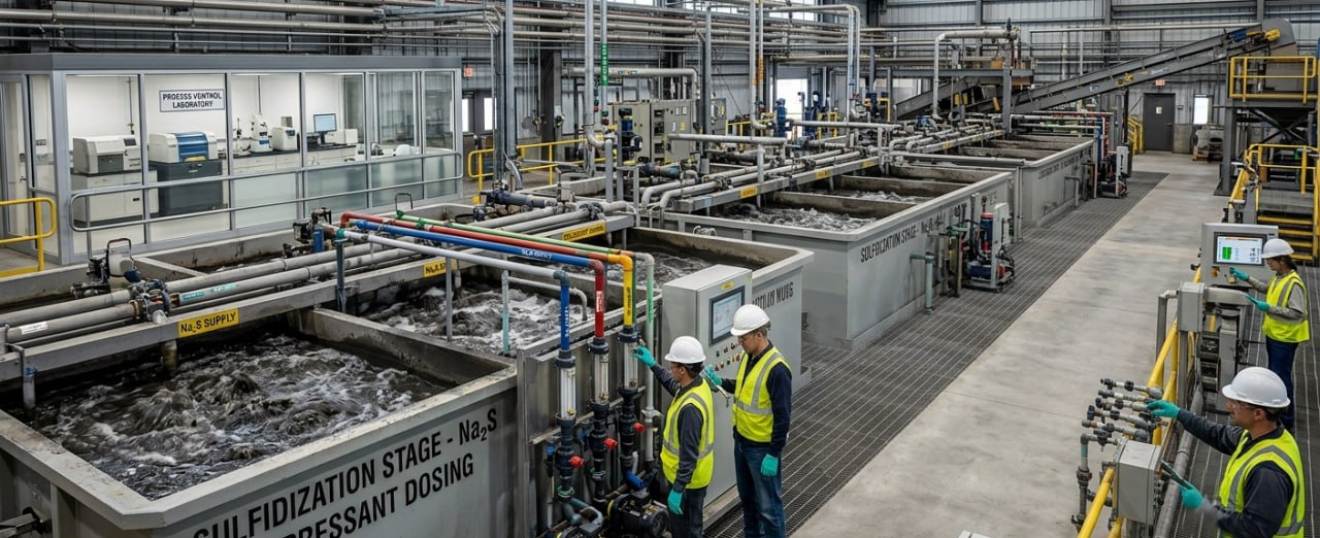
Artificial Sulfide Film Formation: When introduced into the flotation slurry under controlled alkaline conditions, sodium sulfide immediately modifies the mineral surface. It forms an ultra-thin, synthetic sulfide-like layer across the oxidized particle lattice.
Restoring Collector Adsorption: Once this surface transformation takes place, standard thiol collectors can readily adhere to the mineral. The particle changes from water-attracting to water-repelling (hydrophobic), allowing air bubbles to carry the mineral safely to the concentrate froth.
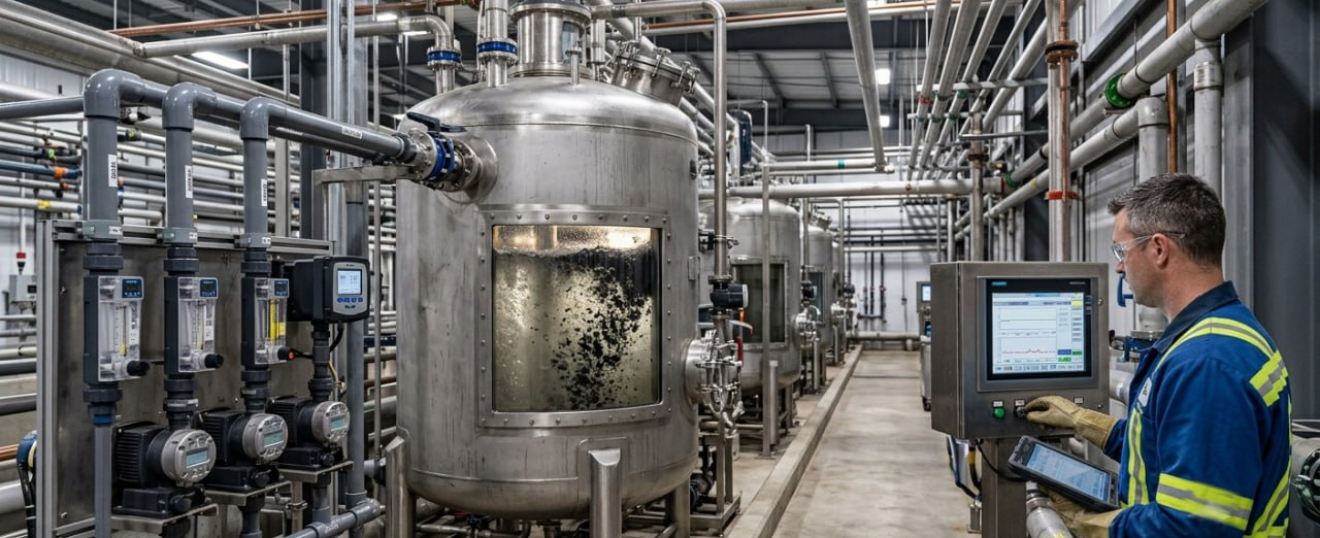
Precision Dosing Matters: Sulfidization requires precise operational control. An insufficient dose leaves oxide surfaces untreated, whereas an excessive dose can saturate the solution and temporarily suppress flotation altogether. Modern processing plants solve this by utilizing automated potential monitoring at the conditioning stage.
3. Selective Separation: Sodium Sulfide as a Sulfide Depressant
In complex polymetallic ores containing multiple base metals such as copper-molybdenum, lead-zinc, or precious-metal-bearing sulfides the primary challenge is not bulk recovery, but selective separation.
Sodium sulfide serves as a proven, highly efficient, and environmentally preferable depressant compared to toxic cyanide-based alternatives.
Key Separation Applications:
Copper-Molybdenum Separation: In copper-moly circuits, sodium sulfide is introduced to desorb previously attached collectors from copper minerals (such as chalcopyrite) and iron sulfides (pyrite). This suppresses the copper from floating, allowing molybdenite which possesses natural water repellency to float cleanly into the premium concentrate.
Pyrite and Gangue Suppression: In polymetallic base metal circuits, introducing sodium sulfide lowers the electrochemical potential of the pulp, preventing unwanted iron sulfide minerals from floating alongside target lead or zinc concentrates.
Collector Stripping for Cleaner Stages: In multi-stage cleaning banks, sodium sulfide effectively cleans mineral surfaces of residual reagent coatings, preparing the slurry for clean, highly selective downstream separation.
4. Operational Best Practices in Flotation Circuits
To extract maximum metallurgical value from sodium sulfide without operational interruptions, processing plants implement strict operational best practices:
Solution Preparation: Sodium sulfide should be dissolved in fresh water to prepare dilute stock solutions right before use. Because dissolved sulfide solutions can oxidize upon prolonged exposure to ambient air, storage tanks should remain closed.
Stage Dosing: Rather than adding the entire chemical volume at a single point, multi-stage addition directly into conditioning tanks or between flotation banks provides superior process control and prevents over-dosing.
Pulp Alkalinity & Safety: Flotation pulp should be maintained within standard alkaline pH ranges. Operating in alkaline environments ensures optimal reagent stability, maximizes surface activation, and prevents gas generation within the plant environment.
5. Technical Grade Considerations for Mining Operations
Consistent flotation performance requires chemical purity without disruptive contaminants. Metallurgical engineers typically source Industrial Grade 60% Flakes (Standard or Low-Iron Yellow Flakes) for reliable operations:
High Active Assay: A guaranteed minimum active sulfide content ensures predictable dosing rates and minimizes consumption per ton of processed ore.
Controlled Iron Content: Low-iron grades are preferred when processing sensitive minerals to avoid unneeded iron precipitation in flotation cells.
Packaging Integrity: Due to the hygroscopic nature of the material, packaging must incorporate multi-layer, moisture-resistant inner liners to prevent caking and oxidation during international transit and warehouse storage.
6. Sourcing Reliable Flotation Reagents
Sodium sulfide remains a cornerstone reagent in global mineral processing operations. By bridging the gap between difficult oxide minerals and high-grade downstream recovery while offering clean depression in polymetallic circuits, it enables modern concentrators to process complex ores profitably.
PKS Chemical provides dependable, industrial-grade Sodium Sulfide 60% Flakes tailored for global mining and mineral flotation operations. Supported by full batch analysis certification, durable moisture-proof packaging, and multi-modal logistics handling across key mining hubs in Asia, Turkey, CIS, and the Middle East, we ensure secure, uninterrupted supply chains for your processing facility.