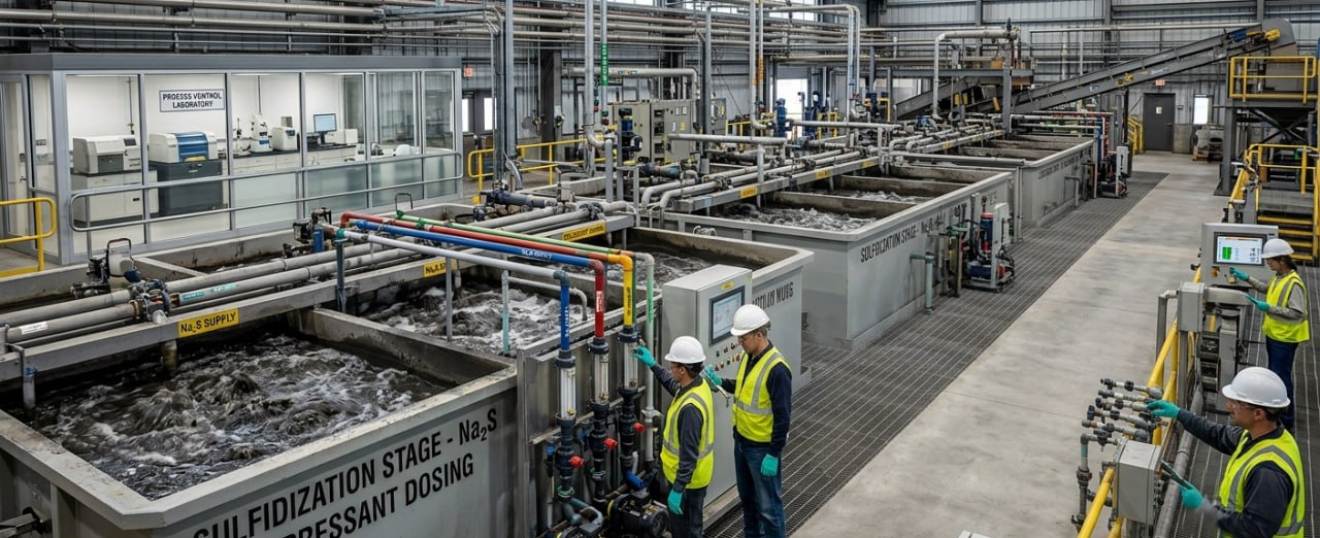
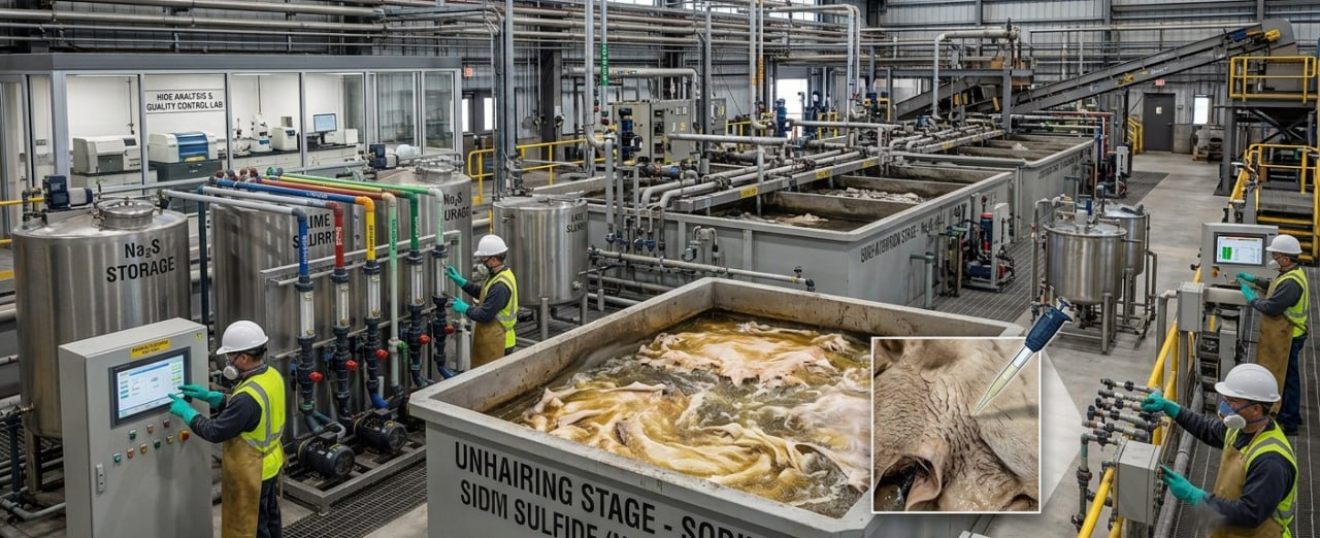
Sodium sulfide (Na₂S) is an important reagent in mineral processing, particularly in the flotation of oxidized and partially oxidized ores. Depending on the ore mineralogy, dosage, pH, oxidation-reduction conditions, and reagent scheme, sodium sulfide can act as a sulfidizing agent, a surface modifier, or a depressant.
Its primary function is to modify the surface of certain oxide and hydroxide minerals so they can respond more effectively to sulfhydryl collectors. In other flotation circuits, sodium sulfide may also reduce the floatability of selected sulfide minerals and improve separation selectivity.
This article explains the role of sodium sulfide in mineral flotation, its sulfidization mechanism, depressant behavior, process-control requirements, and key handling considerations for concentrator plants.
Why Is Sodium Sulfide Used in Mineral Flotation?
Sodium sulfide is used in flotation for several process objectives:
Sulfidization of oxidized copper, lead, and zinc minerals
Surface modification before collector addition
Improvement of collector adsorption
Depression of selected sulfide minerals
Control of mineral selectivity in mixed ore systems
Reduction of unwanted flotation of iron-bearing minerals in specific circuits
The actual result depends on the mineral surface, water chemistry, reagent sequence, pulp density, oxidation state, and residence time. Sodium sulfide should therefore be selected and dosed as part of a complete flotation reagent program rather than as an isolated chemical input.
Sodium Sulfide as a Sulfidizing Agent
The Challenge of Oxidized Ores
Many oxide and carbonate minerals do not respond efficiently to conventional sulfide mineral collectors. Their surfaces may be hydrophilic and may not provide suitable sites for collector adsorption.
Examples of minerals that may require sulfidization or surface activation include:
Copper oxide minerals
Lead carbonate and sulfate minerals
Zinc oxide minerals
Partially oxidized sulfide ores
Mixed oxide-sulfide ore feeds
In these cases, sodium sulfide is added to modify the mineral surface before the collector is introduced.
How Sulfidization Works
During sulfidization, sulfide species interact with the mineral surface and form a thin sulfide-rich layer. This modified surface may become more compatible with sulfhydryl collectors such as xanthates or dithiophosphates.
A simplified process sequence is:
Sodium sulfide dissolves in the flotation pulp.
Sulfide and hydrosulfide species interact with exposed mineral sites.
A sulfide-rich surface layer forms on the target mineral.
The collector adsorbs onto the modified surface.
The mineral becomes more hydrophobic and can attach to air bubbles.
The target mineral is recovered in the flotation concentrate.
The reaction is not identical for every mineral. Surface oxidation, crystal structure, dissolved metal ions, and pulp chemistry all influence the efficiency of sulfidization.
Sodium Sulfide in Lead and Zinc Mineral Flotation
Sodium sulfide may also be used in the treatment of oxidized lead and zinc ores. Lead carbonate minerals such as cerussite and lead sulfate minerals may require sulfidization before collector addition.
In zinc flotation, sodium sulfide can be applied in combination with other modifiers to improve the response of zinc oxide minerals. However, zinc oxide flotation is highly dependent on the reagent scheme and may also involve activators, chelating agents, fatty acids, amines, or other collectors.
The selection of sodium sulfide should be based on:
Mineral liberation
Oxidation degree
Gangue mineralogy
Presence of iron oxides and clays
Water chemistry
Required concentrate grade
Recovery target
How to Select Sodium Sulfide for Mineral Processing
Before purchasing sodium sulfide for a flotation plant, the technical team should review:
Active concentration
Product form, such as flakes or solid material
Iron and other impurity levels
Moisture content
Packaging format
Batch consistency
COA availability
SDS and technical documentation
Storage and transport requirements
Compatibility with the plant’s dissolution and dosing system
Consistent product quality supports more stable reagent preparation and improves the reliability of flotation test results.