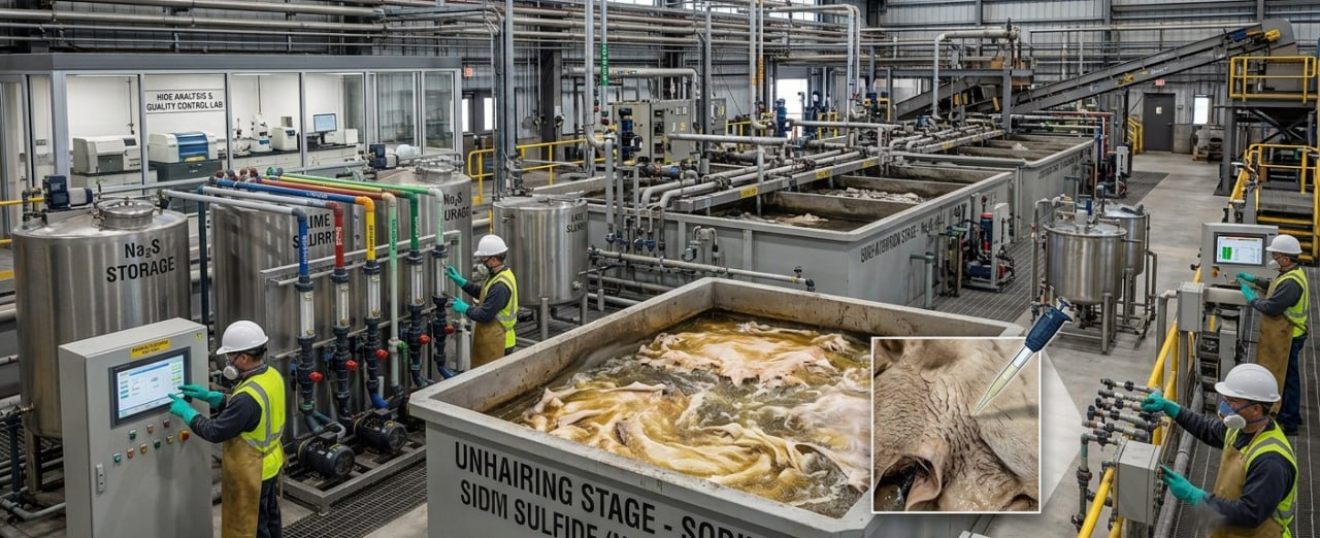
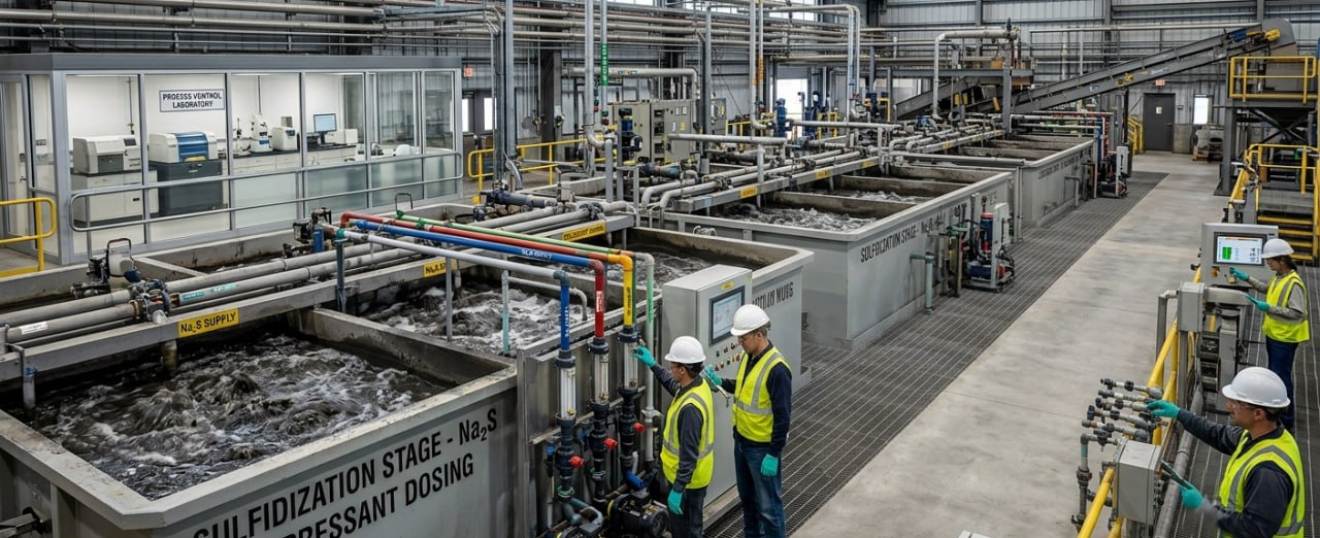
The transformation of raw animal hides into high-quality leather is a complex chemical journey. Among the various stages of the “Beamhouse” process, unhairing and liming are arguably the most critical for determining the final texture and strength of the leather. At the heart of this process lies Sodium Sulfide (Na2S), the industry-standard chemical for efficient hair removal and fiber opening.
In this technical guide, we explore the chemical mechanism of sodium sulfide in tanneries, optimal dosage strategies, and how to manage the process to ensure both quality and environmental compliance.
1. The Chemical Role of Sodium Sulfide in Unhairing
The primary objective of the unhairing stage is to remove hair, epidermis, and unwanted proteins from the hide without damaging the underlying collagen structure.
The Mechanism of Keratin Breakdown
Hair is primarily composed of keratin, a fibrous protein held together by strong disulfide bonds (−S−S−). Sodium sulfide acts as a powerful reducing agent. When introduced into the high-pH environment of the liming pit (usually pH 12.0 to 12.5):
The sulfide ions attack the disulfide linkages in the keratin.
The hair bulb and shaft weaken rapidly, leading to the complete dissolution of the hair (the “Hair Burn” process) or loosening of the hair roots (the “Hair Save” process).
2. Hide Preparation: Beyond Hair Removal
While its name suggests only unhairing, Sodium Sulfide plays a secondary, vital role in hide preparation:
Fiber Opening: It assists in “plumping” the hide, causing the collagen fibers to swell. This opening of the fiber structure is essential for the subsequent penetration of tanning agents.
Removal of Non-Collagenous Proteins: It helps dissolve mucoids and globulins, ensuring the leather remains flexible and prevents “bony” or stiff textures in the finished product.
3. Optimizing Dosage and Process Parameters
In industrial tanning, “more is not always better.” Precision in dosing Sodium Sulfide is crucial for cost-efficiency and hide integrity.
Key Factors for Dosage Control:
Hide Type & Origin: Thick cattle hides require higher concentrations compared to goat or sheepskins. Typically, dosage ranges from 2.0% to 5.0% based on the salted weight of the hides.
Temperature: The reaction rate of Na2S increases with temperature. Most tanneries maintain the float between 25∘ and 28∘. Exceeding 30∘ risks “scud” fixation and permanent grain damage.
Mechanical Action: The rotation speed of the drums influences the penetration of the sulfide. Controlled mechanical action ensures uniform unhairing across the entire surface of the pelt.
4. Common Challenges and Solutions
Preventing Grain Damage
Excessive use of Sodium Sulfide or rapid pH spikes can cause “grain wrinkle” or “grain coarseness.” To prevent this, PKS Chemicals recommends a gradual feeding system where the sulfide is added in stages rather than all at once.
Safety and H₂S Gas Management
Sodium Sulfide is safe in high pH environments, but if the pH drops below 9.0 (due to accidental acid contact or improper washing), lethal Hydrogen Sulfide (H2S) gas is released.
Best Practice: Always ensure the drums are well-ventilated and pH strips or meters are calibrated daily.
5. Environmental Compliance: Sulfide Recovery
Tannery wastewater is notoriously high in sulfide content. Modern environmental standards (such as LWG - Leather Working Group) require tanneries to:
Use Sulfide Oxidation (using catalysts like Manganese Sulfate) to treat effluent.
Implement Sulfide Precipitation to recover and reuse chemicals where possible.
Using high-purity Sodium Sulfide (like the 60% Low-Iron Flakes supplied by PKS) reduces the overall chemical sludge and simplifies the wastewater treatment process.
Why Source Sodium Sulfide from PKS Chemicals?
As a strategic partner to the global leather industry, PKS Chemicals provides high-grade Sodium Sulfide specifically formulated for beamhouse operations. Our product offers:
Consistent 60-62% Concentration: For predictable dosing and batch-to-batch uniformity.
Low Iron Content: To prevent dark staining on the grain of premium leathers.
Technical Support: Our engineering team assists in optimizing your drum formulas for maximum yield.