Heavy metal contamination in industrial wastewater presents a severe environmental hazard and a critical compliance challenge for modern manufacturing, plating, mining, and chemical processing facilities. Standard treatment methods, such as hydroxide precipitation, often fail to meet stringent environmental discharge limits, especially when treating complex wastewater containing chelated metals or multiple contaminants.
Sodium sulfide (Na2S) is widely recognized as one of the most effective reagents for heavy metal precipitation. It offers distinct thermodynamic advantages, resulting in extremely low metal solubility and high process efficiency.
This guide details the chemical mechanisms of sulfide precipitation, compares it with hydroxide treatment, examines key operational parameters, and outlines safe handling practices for industrial wastewater treatment facilities.
Sulfide Precipitation vs. Hydroxide Precipitation
While hydroxide precipitation (using lime or caustic soda) is widely used due to its lower chemical cost, sulfide precipitation using sodium sulfide provides superior performance in several key areas:
Extremely Low Solubility
Metal sulfides are significantly less soluble than metal hydroxides across a wide pH range. For example, at a neutral pH, the solubility of copper sulfide is several orders of magnitude lower than that of copper hydroxide.
Treatment of Chelated and Complexed Metals
Industrial wastewater often contains chelating agents (such as EDTA, tartrates, or ammonia) that bind to metal ions and prevent hydroxide precipitation. Sulfide ions have a much stronger chemical affinity for heavy metals, allowing them to displace chelating ligands and precipitate the metals successfully.
Stability Over a Broad pH Range
Hydroxide precipitates are highly amphoteric, meaning they can redissolve if the pH of the wastewater shifts too high or too low. Metal sulfides remain stable and insoluble over a much wider pH window, reducing the risk of accidental metal redissolution.
Key Process Parameters for Wastewater Treatment
1. pH Control
Operating pH is the most critical variable. Sulfide precipitation should always be conducted under alkaline conditions (typically pH 8.5 8.5 to 10.0 10.0 ).
2. Dosage Optimization
Under-dosing: Leads to incomplete metal precipitation and failure to meet discharge standards.
Over-dosing: Excessive sodium sulfide creates residual dissolved sulfide in the effluent, which can increase chemical oxygen demand (COD), cause toxicity to aquatic life, and require downstream oxidation treatment (e.g., using hydrogen peroxide or chlorine).
3. Coagulation and Flocculation
Metal sulfide precipitates often form as very fine, colloidal particles that settle slowly. The addition of anionic or cationic polymer flocculants, along with coagulants like ferric chloride, is usually necessary to aggregate the fine particles into large, fast-settling flocs.
Storage, Safety, and Handling Guidelines
Because of its chemical reactivity, industrial-grade sodium sulfide must be managed carefully:
Segregation: Store sodium sulfide flakes away from acids, oxidizers, and chlorinated chemicals. Emergency containment areas must prevent acid runoff from mixing with sulfide storage.
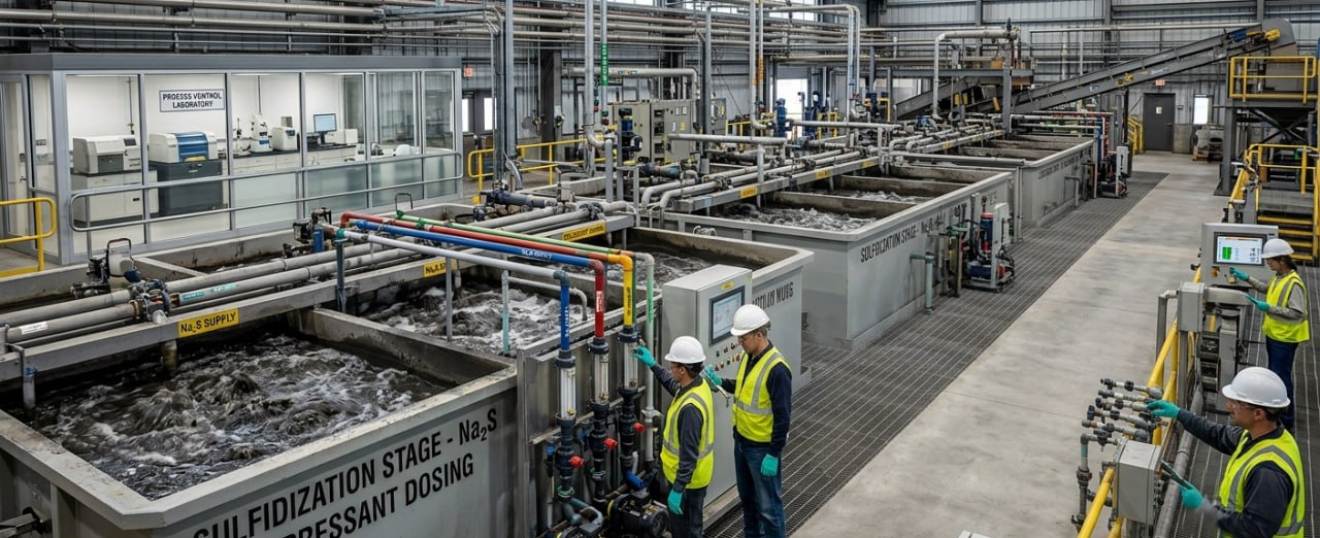
Ventilation: Ensure the chemical preparation and dosing areas are equipped with active ventilation systems and H2SH_2SH2S gas detectors.
Material Compatibility: Use corrosion-resistant materials for storage and piping, such as high-density polyethylene (HDPE), polypropylene (PP), or specialized stainless steel. Avoid copper, zinc, and aluminum alloys.
Industrial Supply and Quality Assurance
For environmental compliance managers, the reliability of treatment chemicals is paramount. Impurities or inconsistent concentrations in sodium sulfide can destabilize dosing systems, leading to compliance violations.
PKS Chemicals is a dependable B2B partner, supplying industrial-grade Sodium Sulfide with consistent active content, compliant packaging, and reliable regional shipping logistics to support continuous wastewater treatment operations.
To access technical specifications, TDS, and safety datasheets, visit our Sodium Sulfide Product Page.
To discuss your wastewater treatment specifications or request a commercial quote, contact our engineering sales team via our Contact Us page.