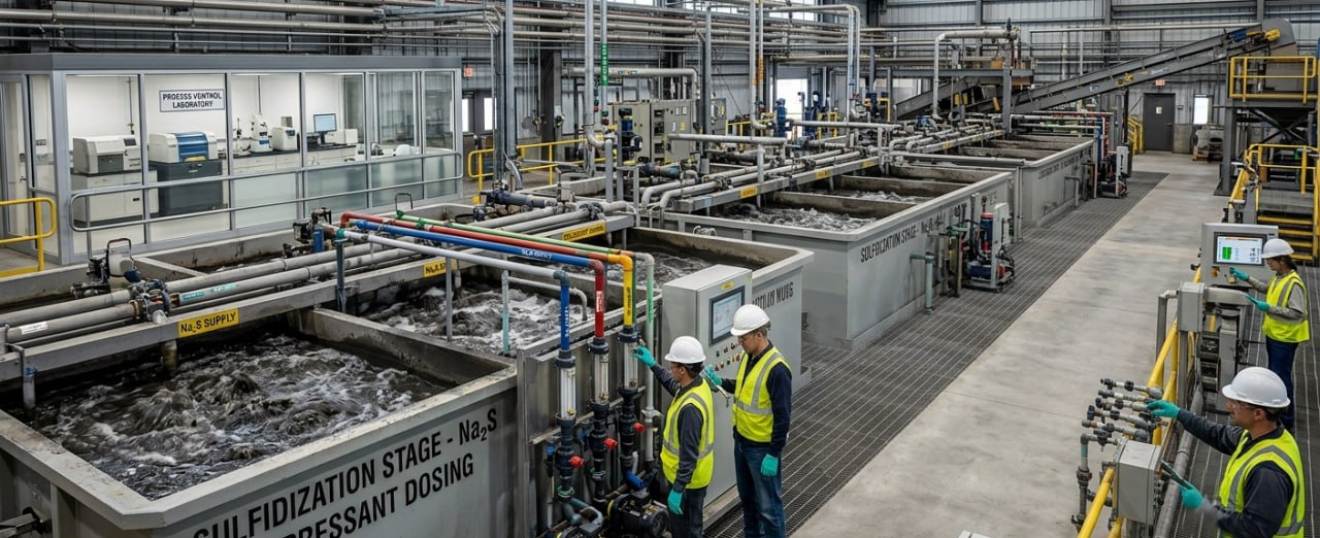
In commercial-scale chemical manufacturing, profitability and brand reputation depend on two non-negotiable variables: reaction efficiency and batch-to-batch consistency. While organic building blocks often take center stage in synthesis discussions, inorganic reagents serve as the vital catalysts, pH regulators, neutralizing agents, and redox drivers that govern the entire pathway.
Whether you are synthesizing industrial dyes, developing surfactants, or formulating specialty chemical intermediates, minor discrepancies in your inorganic reagent inputs can lead to incomplete reactions, elevated byproduct formation, and catastrophic batch failures.
This technical overview explores the strategic role of inorganic reagents in industrial synthesis and outlines protocols for maintaining peak process repeatability.
The Functional Roles of Inorganic Reagents in Industrial Synthesis
Inorganic compounds rarely act as passive components; they are active reaction engineers. Their primary roles include:
pH Conditioning and Acid/Base Catalysis: Precise protonation or deprotonation steps require robust bases such as Sodium Hydroxide (Caustic Soda) or inorganic acids. Deviations in reagent assay undermine stoichiometric ratios, shifting reaction equilibriums unfavorably.
· Redox Modulation: Inorganic salts act as controlled electron donors or acceptors (sulfites, sulfides, or chlorates), driving reduction or oxidation stages cleanly without triggering runaway thermal spikes.
· Precipitation and Salting-Out Agents: In the downstream recovery of synthetic products, inorganic salts regulate ionic strength, forcing organic intermediates out of aqueous solutions with minimal product loss.
· Phase Transfer and Complexation: Inorganic ligands stabilize reactive intermediates, suppressing kinetic side pathways and favoring the targeted isomer or compound structure.
The Direct Link between Reagent Purity and Batch Consistency
For contract manufacturers and chemical plants, an inconsistent batch is a direct financial loss. The failure usually traces back to reagent quality variations:
Eliminating Stoichiometric Drift
When bulk chemical suppliers ship lots with fluctuating active assay percentages (e.g., Caustic Soda fluctuating between 96% and 99%), standard plant dosing formulas drift out of stoichiometric balance. This leads to leftover unreacted raw materials, complicated wash steps, and compromised final yields.
Preventing Catalyst Poisoning and Inadvertent Side Reactions
Trace elemental impurities such as heavy metal contaminants, excessive iron (Fe), or unexpected moisture content can:
· Deactivate expensive heterogeneous or homogeneous catalysts.
· Catalyze unwanted secondary reactions that produce colored impurities or foul odors in the end product.
· Accelerate equipment corrosion inside reactors and heat exchangers.
Best Practices for Maximizing Synthesis Efficiency
To safeguard reaction throughput and ensure repeatable production cycles, engineering and procurement teams should implement three baseline protocols:
Strict Assay & Trace Metal Auditing: Look beyond the technical grade label. Require comprehensive Certificates of Analysis specifying exact assay figures, chloride contents, iron levels, and insoluble matter.
Moisture and Environmental Protection: Many vital inorganic reagents (like caustic flakes, soda ash, and sodium sulfides) are hygroscopic. Proper packaging (airtight, multi-wall bags with sealed PE liners) is necessary to avoid ambient hydration and caking during transit and storage.
Automated Dosing Calibration: Routinely synchronize dosing machinery against physical lot parameters rather than relying on assumed fixed densities.
4. Why Industrial Producers Rely on PKS Chemicals
At PKS Chemicals, we bridge the gap between raw chemical extraction and precise industrial requirements. We supply high-demand inorganic reagents tailored for synthetic, textile, and manufacturing applications across Pakistan, Turkey, Iraq, and the CIS region.
· Reliable Assays: Every consignment adheres strictly to specified technical tolerances, eliminating hidden stoichiometric fluctuations in your synthesis reactors.
· Industrial-Grade Packaging Standards: Multi-layer, moisture-resistant packaging ensures reagents reach your factory floor free-flowing and ready for automated dispensing.
· Regional Supply Chain Security: With strategically positioned stockpiles and export logistics, we protect your plant from raw material outages and supply shocks.
Maximizing yield in chemical synthesis does not require reinventing the reaction pathway it requires mastering the quality of your foundational inputs. By partnering with suppliers who guarantee strict purity parameters and supply dependability, chemical manufacturers can streamline synthesis, cut purification overhead, and deliver uncompromised product consistency batch after batch.
Looking to stabilize your synthesis yields and eliminate raw material variability?
Connect with the technical sales team at PKS Chemicals today to evaluate our portfolio of high-performance inorganic reagents and request detailed technical data sheets (TDS/COA).