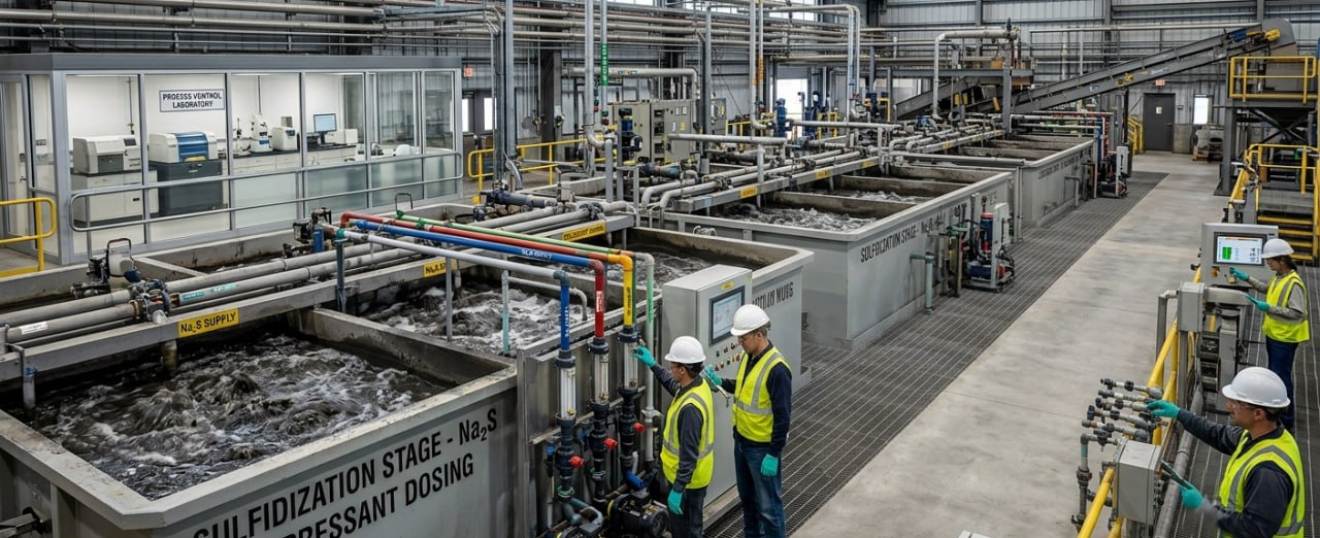
In the complex landscape of mineral processing, selecting the right reagents is the deciding factor between a profitable operation and a loss-making one. Copper Sulfate Pentahydrate is an indispensable reagent in flotation circuits, particularly for the activation of sulfide minerals.
At PKS Chemicals, we support industrial mining operations by providing consistent, high-purity chemical solutions. This guide offers a technical overview of how copper sulfate functions in flotation and why quality control in your reagent supply chain is critical to recovery rates.
The Role of Copper Sulfate in Flotation
Copper sulfate (CuSO4⋅5H2OCuSO_4·5H_2OCuSO4⋅5H2O) primarily acts as an activator in the flotation of sulfide minerals. Its application is vital when the mineral surfaces are naturally resistant to the attachment of collectors, preventing effective separation.
How Activation Works
When added to the flotation slurry, copper sulfate ions interact with the mineral surface—most notably with sphalerite (zinc sulfide) or pyrite. The copper ions replace metal ions on the mineral surface, creating a “copper-like” surface layer that becomes highly receptive to common collectors like xanthates.
This process significantly increases the hydrophobicity of the mineral particles, allowing them to attach to air bubbles and float, while undesirable gangue material sinks.
Technical Applications in Mining
Sphalerite Activation: This is the most common application. Without copper sulfate, sphalerite remains largely non-responsive to flotation. Copper sulfate “activates” the sphalerite, enabling its selective separation from other sulfide minerals like galena (lead sulfide).
Pyrite Depression Control: In specific circuits, copper sulfate is used in precise concentrations to influence the selectivity between pyrite and other valuable sulfides.
Circuit Optimization: The dosage of copper sulfate is critical. Over-dosing can lead to unwanted activation of impurities, while under-dosing results in poor recovery rates. Maintaining a consistent reagent grade is essential for keeping these process variables within tight tolerances.
Technical Considerations for Plant Managers
To achieve optimal recovery, processing engineers must focus on several key variables:
Purity and Quality: Impurities in low-grade copper sulfate (such as iron or heavy metals) can interfere with the chemistry of the pulp, leading to unpredictable flotation results.
Solubility and Dissolution: Your reagent must dissolve fully and rapidly to ensure consistent concentrations throughout the slurry.
Safety and Handling: As with all heavy metal salts, copper sulfate requires robust safety protocols. Ensure your team utilizes proper PPE and manages runoff effectively to comply with environmental standards.
Why PKS Chemicals for Your Mining Reagents?
The mining industry operates on razor-thin margins where chemical performance is non-negotiable. PKS Chemicals specializes in the supply of industrial-grade Copper Sulfate Pentahydrate tailored for large-scale flotation circuits.
Consistent Chemical Profile: Our product meets international industry standards, ensuring predictable performance in your flotation cells.
Supply Reliability: We understand the critical nature of lead times in mining. Our logistical network ensures timely delivery to operations across the Middle East, CIS, and South Asia.
Full Technical Documentation: Every shipment includes comprehensive TDS, SDS, and batch-specific Certificates of Analysis (COA) to support your metallurgical audits.
Copper sulfate is more than just a chemical—it is a critical metallurgical tool that unlocks efficiency in your flotation circuit. By partnering with a supplier that understands the technical demands of mining, you secure your production quality and operational stability.
Ready to optimize your flotation reagent supply?
View Technical Specs on our Copper Sulfate Product Page