Caustic Soda in Water Treatment: pH Control, Neutralization, and Industrial Standards
In industrial water and wastewater treatment, maintaining the correct pH is essential for process stability, equipment protection, treatment efficiency, and regulatory compliance. Caustic soda, chemically known as sodium hydroxide (NaOH), is one of the most widely used alkaline chemicals for pH adjustment and acidic wastewater neutralization.
From municipal-scale treatment facilities to chemical plants, textile mills, metal processing operations, and manufacturing sites, caustic soda helps operators control water chemistry with speed and precision. However, because it is a strong and highly corrosive alkali, successful application depends on correct concentration selection, controlled dosing, compatible storage systems, and appropriate safety procedures.
This guide explains the role of caustic soda in water treatment, its key applications, practical dosing considerations, and the industrial standards buyers should evaluate before sourcing sodium hydroxide.
What Is Caustic Soda?
Caustic soda is the common industrial name for sodium hydroxide (NaOH), a strong inorganic base available in several commercial forms:
Caustic soda flakes
Caustic soda pearls
Solid sodium hydroxide
Liquid caustic soda solution, commonly supplied at concentrations such as 25%, 32%, or 50%
When dissolved in water, sodium hydroxide releases hydroxide ions, rapidly increasing the pH of the solution. This strong alkalinity makes it highly effective for treating acidic process water, balancing wastewater pH, and supporting several downstream treatment stages.
Why pH Control Matters in Industrial Water Treatment
pH is a core operational parameter in nearly every water-treatment system. It directly affects:
Chemical reaction efficiency
Coagulation and flocculation performance
Heavy-metal precipitation
Corrosion potential
Biological wastewater-treatment activity
Discharge compliance
Membrane and filtration-system performance
Acidic water can accelerate corrosion in pipelines, tanks, pumps, valves, and other equipment. It may also reduce the effectiveness of treatment chemicals or prevent certain contaminants from being removed efficiently.
By increasing pH in a controlled manner, caustic soda allows treatment operators to create the chemical conditions required for stable and effective treatment.
Main Uses of Caustic Soda in Water Treatment
1. pH Adjustment
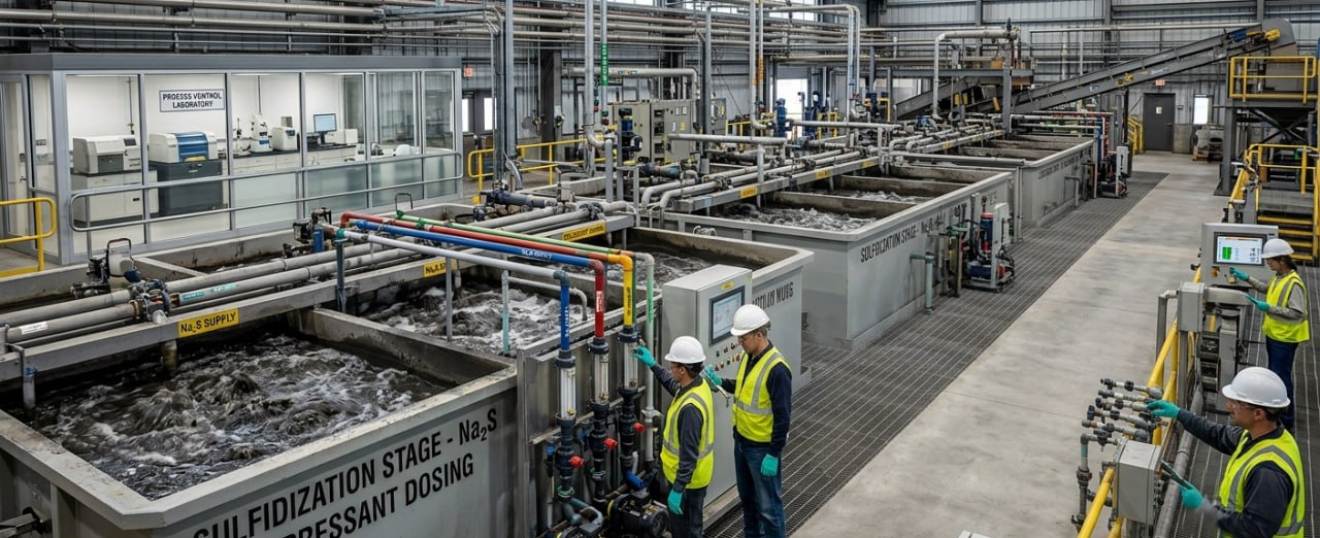
The most common use of caustic soda in water treatment is to raise pH. Industrial effluent may become acidic due to production processes, chemical washing, acid pickling, dyeing, electroplating, mining, or chemical manufacturing.
Caustic soda is often used where rapid and reliable alkalinity adjustment is required. Compared with weaker alkaline materials, sodium hydroxide provides a strong response at relatively low dosing volumes.
Typical pH-adjustment applications include:
Acidic industrial wastewater
Process-water conditioning
Boiler-feedwater treatment
Cooling-water systems
Effluent treatment plants (ETPs)
Reverse-osmosis pretreatment or post-treatment systems, where appropriate
The required dosage cannot be determined by pH alone. It must be calculated through water analysis, alkalinity measurement, acid-base titration, pilot testing, and real-time process control.
Choosing the Right Caustic Soda Grade for Water Treatment
When sourcing caustic soda for industrial water treatment, buyers should assess more than price. Product consistency, traceability, packaging, logistics, and technical documentation are all important.
Key specifications to review
Sodium hydroxide concentration or assay
Product form: flakes, pearls, or liquid solution
Sodium carbonate content
Chloride content
Iron content
Heavy-metal impurities, where relevant
Color and appearance
Packaging type
Batch consistency
Certificate of Analysis (COA)
Safety Data Sheet (SDS)
Transport and export documentation
For sensitive industrial processes, impurity levels may affect downstream performance. Buyers should define technical specifications based on the application rather than selecting solely by nominal NaOH concentration.
Need Caustic Soda for Your Water Treatment Process?
PKS Chemicals supplies caustic soda for industrial applications with documentation and packaging options suitable for international B2B procurement.
Contact our team to request