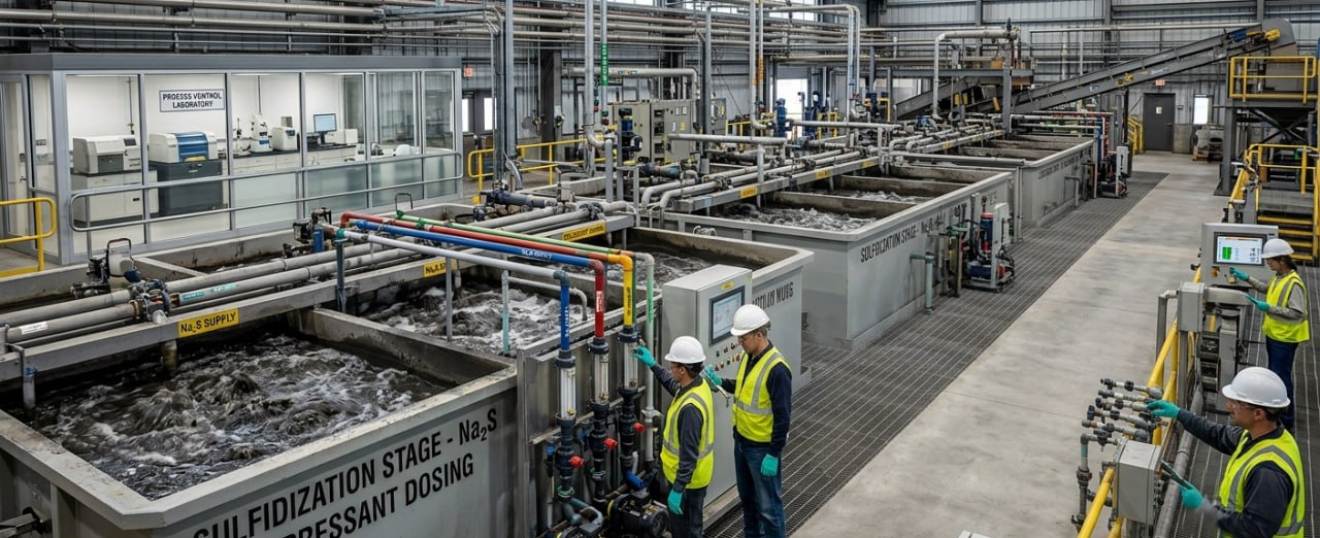
Caustic soda — sodium hydroxide (NaOH) — is one of the most widely produced and consumed industrial chemicals in the world. It is a fundamental building block for many downstream products and processes, serving as a raw material, a process chemical, a neutralizing agent, and a reagent across the chemical industry.
For chemical manufacturers, formulators, and procurement managers, understanding how caustic soda behaves, how it is specified, and how its quality affects downstream products is essential. A poorly selected grade, an inconsistent impurity profile, or a mismatch in concentration can disrupt a production line and compromise final product quality.
This guide provides a technical, non-promotional overview of caustic soda in chemical manufacturing — covering its role in synthesis, grade and purity considerations, handling and safety, and what to look for in an industrial supplier.
Why Caustic Soda Matters in Chemical Manufacturing
Caustic soda is a strong alkali that participates in or supports a wide range of chemical operations. Its importance comes from several distinct properties:
· High alkalinity: Strongly raises pH and neutralizes acids effectively.
· High solubility: Readily forms concentrated aqueous solutions.
· Reactivity as a base: Readily participates in neutralization, saponification, and salt-forming reactions.
· Scalability: Available in large industrial quantities in multiple physical forms.
· Process versatility: Used as a reactant, catalyst support, neutralizer, pH regulator, and cleaning agent.
Because of these properties, caustic soda appears throughout the chemical value chain — from commodity inorganic salts to specialty organic intermediates and finished formulations.
The Role of Caustic Soda in Chemical Manufacturing
Caustic soda performs several distinct functions across the chemical industry:
1. As a Raw Material
In many processes, NaOH is a direct reactant that becomes part of the final molecule or product.
Salt Formation
Caustic soda reacts with acids to form salts and water:
NaOH + HCl → NaCl + H₂O
sodium hydroxide + hydrochloric acid → sodium chloride + water
This type of reaction is used to produce a range of sodium salts from their corresponding acids, where the neutralization step is central to the synthesis.
Sodium Salts and Derivatives
Caustic soda is an entry point into many sodium-based chemicals used in downstream industries, including:
Sodium hypochlorite, produced by reacting caustic soda with chlorine.
Sodium phosphates, used in detergents, food processing, and water treatment.
Sodium silicates, used in adhesives, detergents, and construction products.
Sodium sulfite and bisulfite, used in water treatment, pulp, and photography.
Sodium carbonate-related chemistry in certain industrial routes.
These products are themselves feedstocks for many further downstream industries.
2. As a Neutralizing Agent
Chemical manufacturing generates acidic streams that must be neutralized, either to produce valuable salts or to make process streams safe for further handling.
Caustic soda offers advantages for neutralization because it:
Is a strong, controllable alkali.
Produces highly soluble by-products in many cases.
Allows tight pH control when dosed properly.
Can be handled in concentrated liquid form for dosing convenience.
However, dosing must be controlled. Over-neutralization creates an unnecessarily alkaline stream, while under-neutralization leaves residual acidity. In industrial practice, neutralization is carried out with pH instrumentation and controlled dosing.
3. As a Process Chemical and pH Regulator
Caustic soda is frequently used to maintain or adjust alkalinity within a process, even when it is not a final reactant.
Typical applications include:
pH adjustment of process liquors, reaction media, and waste streams.
Precipitation chemistry, where raised alkalinity drives metal ions out of solution as hydroxides.
Conditioning of feed streams before subsequent unit operations.
Cleaning and caustic washing of equipment and production lines.
In many plants, caustic soda is one of the most frequently handled process chemicals, precisely because it is a convenient and effective alkalinity source.
4. As a Reagent in Organic Synthesis
Caustic soda is used in a wide range of organic reactions, often as a base for:
Dehydrohalogenation — removal of hydrogen halide to form unsaturated products.
Saponification — hydrolysis of esters and fats.
Aldol and condensation reactions requiring alkaline conditions.
Salt formation and neutralization of acids in synthetic routes.
Hydrolysis reactions of amides, esters, and nitriles under alkaline conditions.
The choice of caustic soda concentration, temperature, and reaction time depends on the specific chemistry, and process designers typically confirm conditions through laboratory and pilot studies.
· Selecting a Caustic Soda Supplier for Chemical Manufacturing
· Chemical manufacturers depend on consistency. When evaluating suppliers, consider:
· Product consistency across batches
· Specified purity and impurity profile
· Available forms (flakes, pearls, liquid)
· Packaging and transport capability
· COA, SDS, and TDS availability
· Batch traceability
· Export experience
· Communication and technical support
· Reliability of supply for recurring industrial volumes
A supplier who provides stable quality and clear documentation reduces risk throughout the buyer’s production chain.
Why Choose PKS Chemicals
PKS Chemicals supports industrial buyers with caustic soda sourcing for chemical manufacturing and downstream synthesis.
· Working with PKS Chemicals offers:
· Industrial-scale focus: Sourcing oriented toward B2B buyers rather than retail consumers.
· Technical documentation: COA, SDS, and TDS support for quality assurance.
· Grade support: Guidance on matching flakes, pearls, or liquid to the process.
· Export-oriented service: Support for international industrial procurement.
· Risk-aware approach: Emphasis on matching the right specification to the buyer’s process, equipment, and market requirements.
PKS Chemicals’ role is to help buyers source the right caustic soda grade for their process — not to make unverified claims about standards or regions. Product suitability should always be confirmed against the buyer’s technical specification and destination-market requirements.
Contact Us
Need caustic soda for chemical manufacturing, downstream synthesis, or process use? Contact PKS Chemicals for:
Product specifications and COA, SDS, TDS documents
Grade and form selection support
Packaging and export details
Quotation for industrial volumes