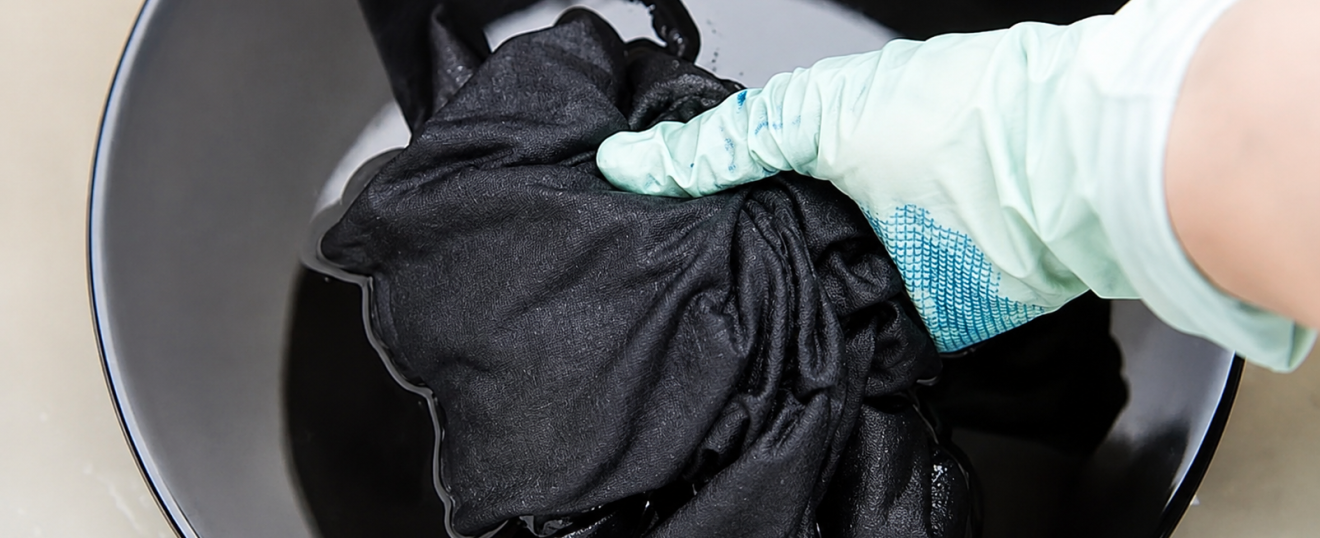
In industrial textile manufacturing—particularly across denim processing, bottom-weight twills, and heavy-duty workwear—sulfur dyes are preferred worldwide for producing intense blacks, navy blues, and earthy shades with high wash durability. However, raw sulfur dyes possess an operational hurdle: in their original state, they are completely water-insoluble and cannot bind directly to natural cotton or cellulosic fibers. Achieving a uniform, deep, and wash-fast shade across thousands of meters of fabric requires a carefully controlled chemical conversion. This critical stage depends on the combined performance of two workhorse chemicals: Sodium Sulfide and Caustic Soda. This guide outlines the practical mechanics of dye solubilization, core penetration, fixation methods, and process troubleshooting to help mill managers maintain consistent shade stability.
The Operational Process: How Sulfur Dyeing Works
The application of sulfur dyes follows a circular four-step chemical cycle:
1. Reduction (Solubilization): In boiling water, Sodium Sulfide breaks down the closed structure of the raw dye powder, converting it into a soluble “leuco” dye solution.
2. Alkaline Activation: Caustic Soda ensures the dye bath maintains a high alkaline condition, keeping the leuco dye fully dissolved and active without settling out.
3. Fiber Sorption: The dissolved dye molecules penetrate deep into the open channels of the swollen cotton fiber rather than sitting on the outer edge.
4. Fixation through Oxidation: Once the dye is distributed evenly inside the fiber, the fabric is exposed to atmospheric oxygen or passed through an oxidation bath. This reverts the dye back into an insoluble pigment, locking it mechanically inside the core of the yarn.
The Power of Sodium Sulfide
Sodium Sulfide is the chemical engine that allows the dye to dissolve. Without an adequate ratio of high-purity sulfide, the dye pigments remain granular in suspension. These micro-grains cannot enter the microscopic cotton channels, resulting in poor color yield, extreme rub-off, and heavy loss of dyestuff in the wastewater.
The Role of Caustic Soda
Caustic Soda acts as the operational backbone for bath stability. It performs three vital tasks:
· Prevents Dye Precipitation: It keeps the dissolved leuco dye stable and dispersed, preventing it from reverting into insoluble particles before entering the fiber.
· Fiber Swelling: It swells the cotton fibers, opening up internal pathways so the dissolved dye can travel to the absolute core of the fabric.
· Workplace Safety & Gas Suppression: In neutral or acidic environments, sulfide solutions can release hazardous gas. Maintaining a strongly alkaline bath with Caustic Soda completely eliminates this risk, protecting operators in the dyehouse.
Raw Material Quality: What Procurement Managers Must Check
In high-speed textile plants, slight inconsistencies in raw chemical quality cause immediate color deviations and expensive batch re-processing. When sourcing industrial chemicals, ensure the following standards:
1. Sodium Sulfide Flakes (60% Minimum Active Content): Ensure low iron content. Excess iron impurities react with sulfur to form insoluble black specks that permanently stain light or medium shades.
2. Caustic Soda Flakes (99% Industrial Grade): Must have ultra-low sodium chloride and carbonate content to guarantee rapid dissolution and clean, residue-free dye baths.
3. Moisture-Resistant Packaging: Both chemicals absorb ambient moisture rapidly. They should always be shipped in multi-layer, laminated moisture-barrier bags to prevent caking, chemical degradation, and handling hazards during international logistics.
Achieving high-yield, uniform sulfur dyeing requires a harmonious chemical setup: Sodium Sulfide to achieve complete dye dissolution, and Caustic Soda to sustain alkalinity, swell fibers, and ensure process safety. PKS Chemical supplies consistent, certified export-grade Sodium Sulfide (Low-Iron Flakes) and Caustic Soda Flakes (99%) directly to industrial textile mills across Pakistan, Iraq, Turkey, and Central Asia.
Request a Certificate of Analysis (COA) or Bulk Sample
Explore Our Complete Textile Chemical Solutions