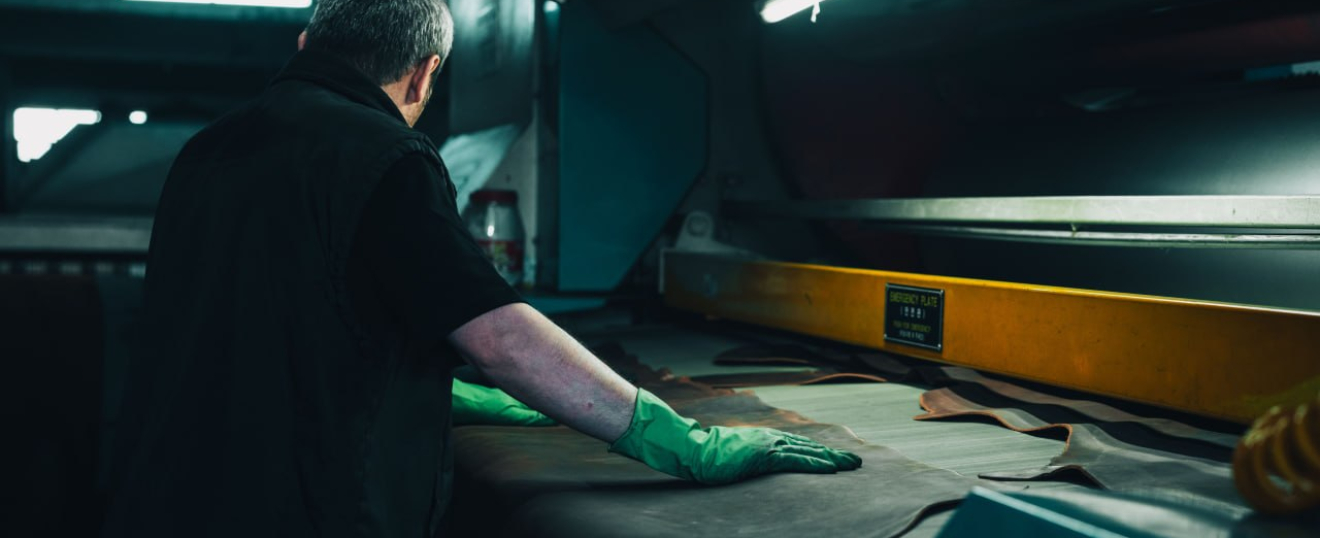
Following the unhairing stage in the tannery beamhouse, the liming process plays a primary role in defining the physical characteristics of the finished leather. While unhairing focuses on the chemical destruction and removal of hair and epidermis, liming is designed to modify the collagen fiber network of the pelt.
Without a properly controlled liming phase, subsequent tanning agents cannot penetrate the hide uniformly, leading to stiff, brittle, or poorly tanned leather.
This technical guide covers the physical-chemical principles of leather liming, the mechanism of fiber opening, pH buffering strategies, and the critical chemical inputs required for process optimization.
The Objectives of Leather Liming
Liming is a chemical pretreatment that prepares raw hides for tanning by achieving several key structural modifications:
Removal of Non-Collagenous Proteins: It dissolves unwanted interfibrillary proteins, such as albumins, globulins, and mucopolysaccharides, which cement the collagen fibers together.
Controlled Swelling (Plumping): It induces osmotic pressure within the hide, causing the collagen structure to absorb water and swell. This mechanical plumping makes the hide easier to flesh and split.
Fiber Opening: It splits the consolidated collagen bundles into individual, fine fibrils, maximizing the surface area available for binding chromium or vegetable tanning agents.
Saponification of Natural Fats: The highly alkaline environment hydrolyzes natural greases and fats present within the dermis, converting them into soluble soaps that can be easily washed out.
Chemical Mechanisms of Fiber Opening and Swelling
Collagen is a triple-helix protein structure held together by hydrogen bonds, covalent cross-links, and electrostatic forces. The liming bath, typically a mixture of calcium hydroxide and sodium sulfide /sodium hydrosulfide, alters this structural arrangement through two main pathways:
Osmotic Swelling
At high pH levels, the carboxyl groups of the collagen protein lose protons and become negatively charged carboxylate ions. The accumulation of these mutual negative charges along the peptide chains creates electrostatic repulsion.
To balance the charge and maintain osmotic equilibrium, water molecules diffuse into the hide, causing it to swell perpendicular to the fiber run.
Proteolytic Degradation
The alkaline conditions break down the non-collagenous protein matrix surrounding the collagen fibrils. As these cementing substances dissolve, the tightly bound collagen bundles separate into individual fibers. This physical separation is known as fiber opening.
Controlled fiber opening determines the ultimate softness, elasticity, and tensile strength of the finished leather.
The Role of Liming Auxiliaries and Sharpening Agents
To accelerate the process and control the degree of swelling, tanneries use “sharpening agents” and auxiliary chemicals:
Sodium Sulfide: Boosts the chemical action by providing additional alkalinity and accelerating keratin breakdown.
Amines and Organic Sulfur Compounds: Used as liming auxiliaries to restrict excessive osmotic swelling while promoting uniform fiber opening, resulting in a tighter, flatter grain profile.
B2B Chemical Supply and Consistency
Industrial liming operations require chemical consistency to ensure predictable run times and batch-to-batch repeatability. Unstable raw materials lead to unpredictable fiber opening, affecting the physical grading of the finished leather batches.
PKS Chemicals supports global leather manufacturing industries by supplying highly reliable, industrial-grade Sodium Sulfide and technical-grade chemicals. We ensure consistent chemical specifications, secure export packaging, and managed logistics to maintain operational continuity in your beamhouse.
To check technical specifications or review safety details, visit our Sodium Sulfide Product Page.
For bulk pricing, logistical arrangements, or custom spec requests, reach out to our team on our Contact Us page.